Top 10 IT stories of 2009

Acquisitions still reshape the market; cutting-edge products like Chrome OS and Windows 7 emerge

Cloud computing: Love it or hate it?

Is cloud computing the next best thing in IT, or is it overhyped and underdelivering? Here's what both sides of the debate have to say.

By Stacy Collett

Computerworld - It seems that IT leaders are warming up to cloud computing, with its promise of elasticity, utility-based billing, multiple storage locations, and the ability to pull data directly from storage devices. In fact, cloud computing ranked second (behind virtualization) as the technology most beta-tested in 2009, according to Computerworld's 2010 Forecast survey of more than 300 IT executives.

But does that mean cloud computing is destined for success? Not so fast, said nearly half of the IT executives polled. They said they are unlikely to try cloud computing this year and ranked it as the No. 1 overhyped and underdelivering technology. What's behind this love-hate relationship? We asked people on both sides of the debate.

Puffing up the cloud

For every naysayer, there's another user who can't get enough of cloud computing's benefits.

Cloud initiatives are high on Jessica Carroll's priority list for 2010 at the United States Golf Association. Last year, the Far Hills, N.J.-based USGA signed on with IBM

"We're able to do online backups nightly into the cloud for our mission-critical data," says Carroll, who is the USGA's managing director for information technologies. "But we were looking for that extra added safety net completely off-site -- at a different location, outside of our environment -- where if we have a disaster, we can go someplace, set up and get our data back."

But the cloud feature that does the most to help Carroll sleep at night is the e-mail continuity component. "E-mail is probably the lifeblood of what we do. Communication and outreach is who we are. If we don't have e-mail, it's a real kink in our business day," she says. "With cloud backup, if we have a situation where our internal systems go down, we can, through the Internet, flip over to our Web-based e-mail system via IBM, using our own e-mail addresses, and the staff barely would even know what happened."

Now Carroll is eager to take cloud computing to the next level. She'd like to reduce the number of servers in the USGA's data center -- it currently has 70 -- and try out cloud-based testing and development.

This year, she will be looking at deploying cloud-based test environments that the USGA would pay a monthly fee to use. "[The providers] are responsible for setting up your environment to your specifications. Can they do that in a faster, more economical way than we can internally? I think the answer is going to be yes," says Carroll. "And if this works for the testing and development environment, do these concepts work for your production environment? I'm anticipating the answer is going to be a mix."

She cautions would-be cloud users to study all contracts and scrutinize the hosting vendor's environment and operating procedures. What is its security policy? What is its disaster recovery plan? Is it willing to share that information with you and put it in a contract?

"This is where I've seen the enterprise-class vendors emerge real strong because they can give you that information and have strong policies and practices they can share with you," Carroll says. "When you are signing with a hosting vendor that is pay-by-month that you found on the Internet -- are you going to be able to get that kind of detail? From what I've experienced so far, that answer is no, and for me that's a red flag."


Speedy Solution

The New York State Office of Temporary and Disability Assistance is hoping that cloud computing will help it handle the 30% jump in demand for its services over the past year as a result of record job losses in the state.

"Our data center is running out of capacity," says CIO Daniel Chan, "and we don't really have enough staff to do the work that we need to get done. So the idea is, can we do something creatively to outsource some of these computing needs?" Chan says he would like to use the cloud for application and development testing first, and then possibly offer Web-based applications to users.

The state agency's current technology is at least one generation behind, Chan says, because the need to comply with government policies on security and other matters leads to delays in deployments. What's more, IT costs are higher than they should be because by the time purchases are approved, the technology is dated, but the state is still paying what it cost when it was new.

If the agency did testing in the cloud, Chan says, it could get systems up and running faster because it would be able to quickly set up multiple test environments, allowing many employees to test concurrently -- on more current equipment that would be less costly because it wouldn't have the bells and whistles of a production environment. "We don't need that same level of robustness" as in a production environment, Chan says. Right now, "in most cases, we pay for the functionality we really don't need for test and development," he explains.

With cloud computing, the agency can stay up to date technologically, Chan says. He plans to launch the agency's first cloud project in the second half of this year. "If we can demonstrate that we're saving the taxpayers money, I'm sure we can get the procurement agency on board," he says. "From a business perspective, it's a very compelling story."

The American Bible Society uses Amazon.com Inc.'s cloud services for 80GB to 100GB of Web files, but that's just the beginning, says CIO and Chief Technology Officer Nick Garbidakis. The Manhattan-based organization plans to use cloud services for some disaster recovery and storage, but Garbidakis says he will move more data to the cloud when servers or equipment needs to be replaced, and he will push out more when bandwidth becomes more affordable for the nonprofit group.

"Any deployment we do, any change of service providers, usually we do it at a time we are ready to retire some five-year-old servers, for example," Garbidakis says. "We would not go out and try to do it while some new servers are deployed already."

The data going to the cloud will be secondary files, "so if it takes an extra second or two to access, it's not a big problem," he says. "I wouldn't push out any of my financial data or primary data right now."

Garbidakis says he expects to move nontransactional systems to the cloud within a year and more heavy-duty applications to the cloud in five years -- "if hardware, software and management costs go down."


Gene Ruth, a storage analyst at Burton Group in Midvale, Utah, says his firm's big clients are interested in cloud computing, but they aren't moving production environments there yet. "I've heard plenty of people try to pick and choose what might be an interesting application for cloud storage," such as archiving or creating access points for contractors in development teams who don't need to use data inside firewalls, he says. "It's an emerging market," Ruth says. "It's not a done deal by a long shot."

Bursting the bubble

Information technology leaders who want to burst the cloud bubble offer arguments like these: Applications for their industries don't yet exist, they can't justify the cost, or cloud computing just isn't ready for enterprise use.

"Cloud computing is a solution looking for a problem. I don't need it right now," says Clarence White, CIO at the Western U.S. branch of The Salvation Army in Long Beach, Calif. One of the largest nonprofit organizations in the world, The Salvation Army has more than 100TB of active data, and its servers process tens of millions of transactions annually. White says he prefers to maintain tight control of his data and likes to have the ability to cross-reference information from different applications. "I haven't yet seen a cloud model that would facilitate my ability to quickly mine my data for business intelligence," he says. "I could be completely wrong, but I haven't seen it."

He also says that cloud computing's other potential uses -- as a means of providing scalable storage, safer disaster recovery or more easily deployed test environments -- have already been addressed in today's data centers with virtualization technology and storage-area networks.

White says he might consider cloud computing "when applications for my industry type are more mature and when the plumbing is mature enough that it feels as if I have local access to my data."

"I think it's overhyped," says Melvin Evans, IT director at Hand Arendall LLC, a Mobile, Ala.-based law firm. "It still sounds better on paper than it does in the real world."

He and his firm's business leaders grew skeptical about the cloud after the much publicized outages suffered by Google Inc. and other providers of hosted IT services in 2009. What's more, the law firm sees legal holes in many vendors' service-level agreements. "The vendors out there tout 95% to 99.9% uptime, but the way it's worded, there is no way you're going to get credit or reimbursement for a small amount of downtime," Evans says. "When the guarantee is worded with so many loopholes, I'll never be able to see that guarantee enforced."

Mike Wright says that in the heavily regulated financial services industry, strict mitigation requirements make cloud computing unappealing to small and midsize banks like the one he works for.

Beyond, say, a document-imaging application, "I can't think of any application that would benefit us for this type of a medium-size business," says Wright, vice president and IT director at HomeTown Bank, a community bank based in Roanoke, Va. "There are certain things that we could virtualize, but we would have to have control over and ownership of the hardware. It circles back around to risk mitigation."

Cloud computing may seem overhyped because so many marketers are jumping on the bandwagon. "To make it seem bigger than it is, many people are including everything they can in [the term] cloud," says Michael Peterson, president of Strategic Research Corp., an IT research and consulting firm in Santa Barbara, Calif. He says he thinks of true cloud computing functions as pre-existing grid-style compute-and-storage services, tightly coupled remote compute-and-storage services that are remote but look local, and hosted computing services.

Functions that shouldn't be considered cloud computing, says Peterson, include remote delivery of everyday data center services such as replication and disaster recovery, routine Web 2.0 services, application service providers' offerings and social networking.

Deciphering the meaning of the term cloud would help the industry "get a handle on adoption," he adds.

Collett is a Computerworld contributing writer. Contact her at stcollett@aol.com.


11 daring predictions for 2010

Computerworld - We asked six IT industry observers to offer their predictions for 2010 and to speculate on who will be the winners and losers in the coming year. Here are their thought-provoking responses.

Swamped by Personal Tech

PC sales in the corporate market have been very slow for some time. In fact, the average PC is nearly five years old. In the meantime, e-readers, smartphones, netbooks and consumer laptops have flooded into the market at aggressive price points. By the end of 2010, IT is likely to feel a bit overwhelmed by the growing number of employees at all levels who want help getting their personal tech to work with corporate resources.

-- Rob Enderle, principal analyst, Enderle Group

An End to Net Freebies

The Internet was a noncommercial environment for the first 30 years of its existence, establishing a core nonprofit ethic. 2010 will be the year this sort of "dumb" free will transition to "smart" free. Vendors will always have free "tastes," but they will increasingly position their best offerings behind caps, subscriptions and/or micropayments. Broadband services are likely to introduce caps of 50GB per month, after which extra charges will apply. Print media may first go bankrupt; then, eventually, the supply of high-quality content will be so restricted that users will gladly pay subscriptions.

-- Bo Parker, managing director of PricewaterhouseCoopers' Center for Technology and Innovation

Facebook-Weary

We will see social networking fatigue, but savvy users will continue to use platforms to build their personal brands. For most people, updating Facebook gets tedious, and your "friends" really don't care which Hogwarts faculty member you are. Twitter takes a lot of work, although it can be a great personal brand-builder, with enough effort. LinkedIn is improving, mostly because of its Answers section; users can become well-regarded authorities in their subject areas by investing an hour or two per week posting thoughtful questions and responses. Plaxo? Please stop pestering me. You're too far down my social networking depth chart for me to spend any time with you.

-- Mike Dover, co-author of the upcoming book Wikibrands: How to Build a Brand in a Customer-Controlled Marketplace

Privacy Dies

Ten years ago, the privacy industry was booming. In 2010, we are on the cusp of having privacy voted off the "things we care about" island. Senior management will continue to be consumed by core issues of cost, value and brand differentiation. Sadly, the self-referential privacy community has not successfully translated its message into the language of business. More damaging to the long-term survivability of the privacy profession is the failure to understand and meaningfully engage the semi-nonexistent privacy concerns of next-generation leaders -- the millennials.

-- Thornton A. May, Computerworld columnist, longtime industry observer, management consultant and commentator

Slow to Staff Up

IT hiring will not pick up noticeably until late next year, and more likely 2011, despite GDP upturns and recovering stock prices in our nation's third straight year of economic instability. Expect the length of the tail on this staffing lag to be much longer than previous recoveries, with volatility punctuating IT pay levels and specialty skills demand as employers struggle to recalibrate their IT workforces by striking the right balance between costs, agility and intense competitive market pressures -- which is a moving target.

-- David Foote, CEO and chief research officer, Foote Partners LLC

Socially Savvy

While the concept of a social networking guru might seem quaint by 2013 (do you have a photocopier guru in your office?), there is an opportunity in 2010 for people who really understand how to make social networking happen within the enterprise. While there are still a lot of carpetbaggers and "gee-whiz" cheerleaders playing in this market, I still find that there are a lot of people who don't have a basic understanding of social networking and are reluctant to ask for help.

-- Mike Dover

Seeing Into the Future

Superman's X-ray vision will become a reality. Well, not quite, but close. The University of Utah has developed a way to look through building walls using a network of inexpensive radios. Fire departments will use these to find people inside burning buildings. Police will use them to track down criminals. Shopping malls, subways, sports arenas and other public places will use these systems to determine how individuals move around public spaces.

-- Bart Perkins, Computerworld columnist and managing partner at Leverage Partners Inc.


The Winners of 2010

IT Workers Who Breathe Social Networking

Social media may have started out as a fad, but it's quickly winning serious corporate converts. The search will intensify in 2010 for IT specialists who can engage audiences in their company's messages, products and services. The skills sets in demand will be technical but also heavily business- and consumer-focused, with many industry- and situationally specific flavors.

-- David Foote

Amazon Outpeddles eBay

Amazon.com's stock hit an all-time high in October, and yes, that includes the company's highs during the dot-com bubble. It's successful because of the clear attention paid to the corporate mission (acquiring customer service darling Zappos will only help here) and tremendous management science -- its collaborative filtering engine gets better and better. And finally, its superior vendor platform that requires sellers to provide more information and a higher-level of quality than eBay. As a result of this, Amazon offers much more security for the buyer.

-- Mike Dover


The Losers of 2010

Oracle Gets Ousted?

In off-the-record, libation-enhanced conversations with CIOs, when you mention the word Oracle -- they see red. In 2010, we may see another instance of Oracle firing its entire sales force as an apology to the industry for customer abuse. In 2010, CIOs have choices, and when possible, Oracle will not be one of them.

-- Thornton A. May

Big Companies That Lag

As the recession ends, midsize companies will increase IT spending faster than large companies. In 2009, most companies cut IT spending dramatically. New IT capabilities were deferred in favor of virtualization, ITIL and other internal efficiency efforts. As the economy improves, executives in large companies who have always believed that IT is too expensive will be unwilling to allow spending to increase significantly. Smaller organizations won't have a choice. Many of their cuts harmed service levels or critical business programs.

-- Bart Perkins

Budget tips for the new year

IT budgets aren't budging, so IT execs will squeeze value from projects that deliver quick ROI and long-term savings

By Julia King


Computerworld - Follow the IT money in 2010, and it will lead to yet more projects designed to cut the cost of doing business. You'll also find a slew of smaller-scale initiatives that have a relatively quick payback or are laser-focused on a wider enterprise business goal, such as improving customer service or product quality. Moreover, an increasing portion of what are shaping up to be relatively flat IT budgets at most companies will be devoted to streamlining and offloading rather than bulking up internal IT infrastructure.

At $3.5 billion Sunoco Inc., for example, CIO Peter Whatnell explains that he is in the process of evaluating Google Apps and other so-called cloud offerings in conjunction with an overall desktop virtualization initiative.

"Our immediate goal is to reduce internal costs," says Whatnell. "Sunoco has 8,500 users, but 50% to 60% of them only need access to two or three office productivity applications. We're looking to see if there's a way to provide those without the support costs associated with Wintel on their desktops."

As part of the same cost-cutting initiative, Sunoco plans to move several hundred users to thin clients on the desktop, which will be connected to "everything virtualized on the back end," Whatnell says.

"If there's a problem, we have UPS deliver a cardboard box with a new [thin-client] device," he explains. "The user plugs it in and gets access to back-end applications. The mailroom becomes our desktop technician. It's the long-term ownership costs we're looking to take out."

IT executives are feeling the squeeze. A little less than one-third of the 312 respondents to Computerworld's 2010 Forecast survey said they expected their organizations' IT budgets to kick up in the new year. Most are dealing with flat budgets. And 37% said budget constraints and economic pressures are the No. 1 management challenges they will face in the next 12 months. Therefore, removing long-term IT costs is the main goal and will remain so throughout 2010, CIOs say. The key rationale for technology investments will be to save even more money down the road.

Sharp Eye on the Future

Bargreen Ellingson Inc., a restaurant supply and design company in Fife, Wash., is in the midst of a $5 million, multiyear ERP implementation project that it started in February 2008 -- smack dab in the middle of the recession. This year, with the foundational elements of the ERP system in place, the company will begin leveraging the system's business analytics capabilities. Also high on the IT agenda is collaborating with the business to streamline various processes, such as managing inventory, to take full advantage of the new IT capabilities.

"A couple of years ago, we knew the current economy was on the horizon and that we were headed into a recession," says Bargreen CIO Jeffrey Greenaway. "We purposely decided to take on a new ERP system because we wouldn't be going at 110% and we could bring in the necessary business people who can't afford to dedicate themselves to this kind of project during busy times." In 2010, he says, it's all about taking out costs by finding and implementing ways to make the business more efficient.


In 2010 and for the foreseeable future, getting things done faster, better and cheaper will involve more and more consumerlike technologies, including cloud-based IT infrastructure capabilities, SaaS applications, netbooks and iPhones, CIOs say. The reasons are simple: They work, they're less of a support hassle, and yes, they're cheaper. In fact, more than half the respondents to Computerworld's survey said they're likely to look to cheaper technologies and homegrown applications to save money this year.

"We now consciously consider [application service providers] or other cloud solutions as valid competitors to hosting our own solutions when we need an application, because of the reduced cost," says Eric Cowperthwaite, chief information security officer at Providence Health & Services, a system of hospitals and clinics based in Seattle. Cowperthwaite predicts that 2010 will bring "a significant rethinking of Providence's end-user desktop environment. IT will be looking to answer questions such as, 'So we really need $700 or $800 worth of software on every computer?' " he says.

Greenaway says he will be integrating several consumer devices into Bargreen Ellingson's IT infrastructure.

"Commoditization is driving better technology into smaller, cheaper devices. I see a real [support] benefit in that," he says. "For years, IT has been conditioned to accept a high level of fixing things as a requirement -- more so than any consumer would tolerate. Now, when folks come in and want to connect their iPhones into the corporate infrastructure, I'm much more likely to do it because I'm not going to have the same level of Tier 1 help desk support issues with it."

Pressure on the Big Guys

Mike Twohig, CIO at Clean Harbors Environmental Services Inc. in Norwell, Mass., has deployed some cloud applications and open-source software as a means of keeping a lid on costs in his nearly 100% homegrown IT environment. He also consciously seeks out up-and-coming vendors to supply his enterprise with hardware and software. The strategy pays off in two ways: He saves money because the lesser-known vendors' products are less expensive, and that makes the big guys, such as Microsoft and Oracle, far more responsive about renegotiating licensing contracts.

For example, Clean Harbors has deployed server virtualization software from Addison, Texas-based 2X Software LLC that Twohig says costs "15 cents on the dollar [compared] to Citrix and has all of the same functionality."

He has also deployed an inventory application from a less well-known vendor. "The reality is that for the investment in time and dollars, I became a bigger fish in the pond to the [smaller] vendor. I use that to drive down costs," he says.


Next year, Twohig will continue to play by this strategy as Clean Harbors strives to make more of its applications accessible to mobile users in the field. "We will have a big push on mobility and productivity to the workforce," he says. The goal, he adds, is "to touch data once," similar to the way car rental companies are able to process transactions and issue customer receipts via mobile units operated by employees roaming remote parking lots.

The bottom line, IT executives say, is that 2010 will be a flat budget year in which they continue with projects that already have demonstrated at least some payback. Sunoco, for example will use in-place business intelligence and analytics tools to dive even deeper into data. And Mueller Water Products in Atlanta will continue to consolidate and streamline its IT infrastructure so it's easier for customers to do business with the company.

"In down times," says Mueller CIO Bob Keefe, "everything you do has to contribute to the business."

That's true, acknowledges Forrester Research Inc. analyst Andy Bartels, but he says he wouldn't be at all surprised to see IT budgets revised upward as the year progresses.

"CIOs' forecasts are a lagging indicator, not a leading indicator," Bartels says. "CIOs are looking back and planning conservative budgets against the worst economy rather than against an improving economy. It's a prudent course to be risk-averse, but in terms of interpreting the course of things to come, you need to take it with about six grains of salt." Forrester, for one, is expecting 7% to 8% growth in the overall tech market in 2010.

"The assumption that 2010 is going to be no better than 2009 is not correct," Bartels says. "While we're not looking at a boom economy, we are looking at a strong economy, and we'll start to see growth."

Acing the IT budget

There are exceptions to every rule, and in 2010, U.S. Tennis Association CIO Larry Bonfante is truly unique.

In a year of largely flat IT budgets, Bonfante has a capital expense budget of $5.2 million. That's in addition to his 2010 IT operating budget of just over $7 million. The largesse comes after cutting costs by 18% in 2009, a year in which the USTA also cut its IT staff by 24%.

Other significant savings came from renegotiating contracts with various SaaS providers and moving all of the USTA's back-end systems to Amazon.com's IT cloud infrastructure. "We cut costs to one-fourth of what they were using a hosted provider," says Bonfante. Now, the USTA is looking to invest for the future.

"We sharpened our own pencils so no one had to come to us this year and ask for deeper cuts or cost reductions," Bonfante says. "We lower costs all the time, so we're not being asked to lower more."

Instead, the 700,000-member White Plains, N.Y.-based USTA is investing in a new digital asset management system so that its 19,000 hours of historical tennis film footage will be easier to access, market and sell.

"We want to digitize this film, then repurpose it to generate revenue," Bonfante explains. Among other things, "we can sell it to coaches, and make and sell DVDs," he says.

The USTA does all of its own film editing in-house and will use part of its IT capital expense budget to build a second video suite at its headquarters. The association is also outfitting media cubicles at its National Tennis Center in Queens, N.Y., with IP television so reporters and writers covering matches can get live feeds from multiple courts.

Looking ahead, "mobile is going to be a big part of what we do in 2010," Bonfante adds, noting that the plan is to mobilize all transactions that take place over TennisLink, the USTA's membership e-commerce system. Coaches, players and other members use the system to register for tournaments, check rankings, or find and join a league.

"We're also using Twitter, Facebook and other social media to reach out to younger people and get them involved in tennis earlier," says Bonfante. "If there's a significant business ROI, we're still making investments."

6 hottest skills for 2010

A slowly reviving economy will have organizations hiring in a few key areas, looking for IT pros with a mix of skills

Computerworld - Pent-up demand for new projects. Veteran employees leaving the company. Who could complain about such pressures in the waning months of 2009, when the year was spent under a cloud of economic misery?

Certainly not Shane Kilgore, IT director at Randall-Reilly Publishing Co. in Tuscaloosa, Ala. He was dismayed to see two talented software developers give notice recently. One had five years under his belt and the other had 10, but Kilgore took their departures as a sign that the economy is taking its first steps toward recovery. He plans to hire a few new developers this year, not only to replace the ones who left, but also to work on new products that will be in demand when -- as many economists predict -- the recovery gains headwind this year. (Read more about the outlook for IT compensation and hiring in Computerworld's Salary Survey.)

"Things have been frozen because of the economy," Kilgore says. "But if we don't get new products out there, we won't have enough places for customers to put their money."

Still, with signs pointing to recovery and even job growth in 2010, companies such as Randall-Reilly are planning to hire only in key areas, and even then, they will favor people with skills that span multiple disciplines. In many cases, companies will still resist bringing on full-time employees, says Tom Silver, senior vice president for North America at Dice Holdings Inc., which operates Dice.com and other careers Web sites. "One thing we see companies do is bring people in on a project basis, and then as business comes back, they hire them full time," Silver says.

According to Computerworld's 2010 Forecast survey, this year's hiring plans certainly aren't at 2009 levels. Less than 20% of the 312 IT executives polled said they plan to increase IT head count in the next 12 months, compared with 26% in the previous year. And nearly 20% said they plan to decrease their IT head count.

For IT professionals who are either looking to get back into the workforce or mulling moves to greener pastures, here are the six types of skills most in demand among survey respondents who said they expect to hire IT workers in 2010.

1. Programming/Application Development

Among companies that plan to hire, the top reason for doing so is to meet demand for new systems and projects. That could be why programming/application development is the skill set that's most in demand, by far, according to Computerworld's survey.

"We're actually seeing new projects get the green light," says Dave Willmer, executive director of IT staffing firm Robert Half Technology. Quite possibly, he says, these were projects that were canceled at the end of 2008, only to be revived for 2010. The wave of new projects is also leading to demand for application developers who can double as business analysts and project managers, Willmer says. (Read Willmer's recent column, "IT hiring poised for skills-driven rebound.")

Specifically, companies will look for developers with knowledge of .Net, Java, Web development, open source and portal technologies such as Microsoft Corp.'s Sharepoint, says Willmer, who is a Computerworld columnist.

Demand is growing for people who know specialized programming languages like Ruby on Rails and AJAX, Silver notes. There aren't many jobs that require those skills, he says, but the number of openings has increased since January 2009.

Kilgore says he would like to find a "hybrid" software developer who can also serve as a business analyst. "We need someone who can talk to the business and be a requirements gatherer, project manager and software developer, all rolled into one," he says. He also needs developers with open-source expertise -- a rare talent, he says -- as well as professionals familiar with Microsoft tools for the ERP and marketing intelligence sides of the business.

Willmer says it makes sense that companies are looking for developers with skills in other areas, such as business analysis or even quality assurance, since employers are concerned about the cost of talent. "They're making sure they get the most out of their resources," he says.

Computerworld's Forecast survey respondents said they also need developers to build homegrown applications in an effort to save money. That's the case for James Sullivan, manager of information services at Covidien, a global health-care company in Mansfield, Mass.

Sullivan soon hopes to add three or four business-savvy programmer/analysts with Java or .Net backgrounds and an understanding of SQL databases. That represents a 25% increase in his usual hiring levels, he says, and it's a departure from previous years when he looked for programming skills alone.

One of Covidien's 2010 projects is to migrate from third-party custom-built applications to commercial off-the-shelf applications or bring them in-house. This, Sullivan says, would reduce spending on vendors and consultants, as well as enable his group to provide the support and turn around business-driven changes more quickly. This dovetails with a growing trend at Covidien to better leverage existing resources. "If something takes 10 hours today, we're asking how we can make it take one-tenth of that," Sullivan says.

At Scottrade Inc., the recession didn't affect hiring, according to Ian Patterson, CIO at the online financial services company. He hired more than 150 IT professionals in 2009 and plans to hire up to 200 this year to meet demand for new internal and customer-facing applications, and to keep up with changes and expansions. He says he's mainly looking for people with C++, Java and C# skills and notes that the company is also implementing a Siebel CRM system for the call center.

Energy Northwest, a power supplier in Richland, Wash., also saw continued growth in 2009. CIO Keith Cooke is looking for computer and electrical engineers with Java, Web and .Net skills to help fully Web-enable an internal system that is partially Web-based but still uses a terminal-based interface. Initially, he didn't want to retrain staff to use a browser-based interface. Now, however, "we're bringing on people who can help us adapt our legacy system to the new workforces coming in," Cooke says.

2. Help Desk/Technical Support

It's no surprise that there will be strong demand for the people who make the help desk hum in 2010, Silver says. The need for support technicians tends to reflect general business conditions, he says. "As the business starts to improve, companies hire more people, which increases demand for help desk staff," Silver explains.

Willmer says he's already seeing a rise in demand for help desk and support skills, especially among companies that cut too deeply in this area in 2009. "They can get away with it for a certain time period, but it eventually catches up and affects revenue," he says. Instead of offering full-time positions, however, some companies are hiring on a project basis, he adds.

3. Networking

The demand for networking professionals, Willmer says, is likely connected to the growing complexity of networks and to the stresses placed on them by virtualization and newly popular approaches to application delivery, such as cloud computing and software as a service.

Cooke says the network will be a big area of focus in the coming year. Energy Northwest is making increasing use of video and voice over its IP network, so it will need network, voice and radio engineers to handle upgrades and ensure compliance with new federal mandates. One of those mandates requires the company to move from wideband to narrowband radio frequencies.

Patterson sees Scottrade dabbling with a converged infrastructure in the next 12 months, driving a need for people with a mix of server, software and networking skills to support networked storage and server devices contained in a single chassis. "This will change the market for the type of people we need," he says. "It won't be just a guy who knows EMC and Hitachi storage, but [one] who knows server, storage and networking all in one device. We'll need a guy who says, 'The network has a problem here,' but when he traces it down, the problem is due to a lock on a table in the storage device."

4. Project Management

Silver sees project management as an area that is growing in importance and a good avenue for technology professionals interested in building up their careers. "Professionals who understand technology and how it fits in the overall business strategy are the ones who add the most value, get paid more and have the most fulfilling careers," he says.

5. Security

Willmer sees a relationship between demand for security skills and the still-shaky economy. "The biggest threat to companies is breaches by their own staff," he says. "When you throw in changes to the staff and disgruntled employees losing their benefits or facing the threat of being laid off, you increase the chances of network fraud or security infringement."

Meanwhile, Cooke is concentrating on hiring people with cybersecurity skills. "Ten years ago, we didn't worry -- as leaders in our companies -- about things like passwords," he says. "Now we're making sure we support complex passwords. That's just a new reality."

nergy Northwest is looking for recent graduates who studied computer engineering and digital controls to help upgrade its manufacturing systems from analog to digital. "They need to understand how those systems should be protected, given the security world we're operating in," Cooke says, citing new federal regulations and threat warnings emanating from the Department of Homeland Security.

Patterson thinks the trend toward including security features in network and storage devices will also affect the skills professionals need in this realm. "I can't believe in the long term that you won't see companies like EMC or Cisco not embedding security into their devices," he says. "We're going to need people who understand not just how to run things from a server or storage or network perspective, but also the security implications."

Security is an evergreen skill, according to Silver. "If you know how to help keep your company's information secure, there will be a home for you forever," he says.

6. Business Intelligence

Computerworld's survey respondents ranked business intelligence skills as No. 6 in importance; for Kilgore, however, BI is a higher priority. "Being a smaller midsize organization, we're late to the game in BI," he says. "We don't have the budget to do a year's worth of R&D; we have to be effective with it out of the gate."

Sullivan would like to find a data architect to help with Covidien's conversion from a nonstandard business intelligence system and miscellaneous reporting tools to an enterprise standard. More important than a BI expert, though, are programmer/analysts who can relate the nitty-gritty of data tables, database joins and data structure to business requirements. "That's what I'm finding is more valuable to us at this stage in getting BI established and used by the business," Sullivan says.

Meanwhile, at Scottrade, Patterson sees BI intertwined with Web 2.0. Whereas BI has traditionally been understood as a system that collects historical data and provides tools to analyze it, he says, he's now more interested in real-time BI that relies, for instance, on people entering competitive data into a wiki and providing that information almost instantaneously via a portal.

Brandel is a Computerworld contributing writer. Contact her at marybrandel@verizon.net.


The Greatest Windows Tips of All Time

Whether you're a grizzled Windows vet or a relative newcomer, you can always use a trick or two for making things go faster. We've compiled our 26 favorite time-saving tips for Windows XP, Vista, and 7. Print out this story and keep it on your desk, under your pillow, or anywhere else.

Classic Windows Tips

Toggle between apps: Use Alt-Tab to switch open programs without touching your mouse. The oldest--and still the best--Windows timesaver.

Navigate app windows: Press Ctrl-Tab to cycle through an application's windows (or through a Web browser's tabs). First cousin of the tip above, and probably the most underrated tip ever.

When in doubt, type it out: If you don't want to hunt through nested menus and the like, you can access most functions, applets, or files the old-fashioned way--by entering them into the Search box. Type Calculator, Control Panel, or even the name of a piece of music on your hard drive, and press Enter.

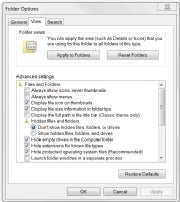
Folder OptionsFull-frontal folders: In Windows Explorer, click Folder Options (located under the Organize menu) to reveal hidden files, show the full path in the title bar, display file extensions, and more.

Unobtrusive updates: Keep your OS current by opening Windows Update (Automatic Update in XP) and setting it to Download updates but let me choose whether to install them. (To get there, press the Windows key and type Windows Update.) That way, you won't have Windows urging you to restart when you don't want to (or worse, triggering a restart when you're away from the PC with an unsaved document open).

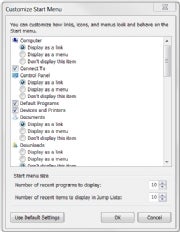
Customize Start MenuTweak your taskbar: Right-click the Taskbar and choose Properties to find options for switching to the old Start menu, choosing which icons show in the notification area, setting default programs to appear in the Start bar menu, and more.

Partition, partition, partition: Make backups and restores easier by partitioning your hard drive and keeping one partition for the OS and the other for your documents and data.

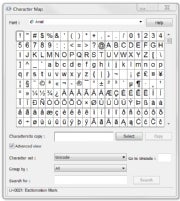
Character MapMake your text special: Need a special character such as © or á? Press the Windows key and type character map in the field to bring up an app that will let you copy and paste the characters you need.

Simple screen capture: Take a screenshot by pressing Print Screen, which copies an image of your full screen to your clipboard so that you can paste it into Paint or your preferred image editor. To capture just the active window, use Ctrl-Alt-Print Screen. For more fine-tuned controls, try Screenshot Captor.

Take a shortcut: Right-click on any application icon, bring up the Properties menu, and click the Shortcuts tab. You can specify a keystroke combination to start your application here. Our personal favorite: Making a shortcut for Windows 7's Snipping Tool makes screenshots much easier. (Windows 7 only)

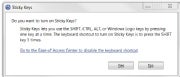
Sticky KeysSticky keys (the good kind): Holding down two keys at once--such as Ctrl-C to copy--is a royal pain. Press the Shift key five times to start Sticky Keys, a feature that allows you to initiate a keyboard shortcut by merely pressing Shift, Ctrl, Alt, or Windows instead of holding that particular key down. Press Shift five more times to toggle Sticky Keys off.

Line 'em up: Want to arrange two (or more) windows side by side in Windows XP or Vista? Hold down Ctrl and click on the desired windows in the taskbar; then right-click the taskbar and select Tile Vertically. In Windows 7, you can simply drag any open window to the right or left edge of your screen and then let go.

Instant classic (control panels): Miss Windows' old Control Panel, which conveniently displayed all of its items at once? In Windows XP and Vista, just open the Control Panel and select Switch to Classic View. In Windows 7, click the View by drop-down menu in the upper-right corner and select your preference.

Speed Up Your Services

Manage the Task Manager: Windows' built-in Task Manager (press Ctrl-Alt-Del and click Task Manager) is great for seeing what your system is up to, but power users will prefer Process Explorer, which shows more details that can help you find a memory leak or troubleshoot a pesky DLL problem.

Nudge your network: If you have network problems, try opening the command prompt (enter cmd in the Start menu's search box) and typing ipconfig /renew to reset your network connection.

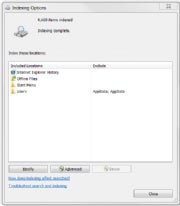
Indexing OptionsIndex this, not that: The Windows Search indexer speeds up built-in search functions, but the indexing process itself can consume system resources at inconvenient times. Open Indexing Options in Control Panel (or press the Windows key and type Indexing Options). The resulting dialog box will let you specify which folders or types of data are indexed to avoid bogging down your PC needlessly.

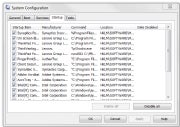
System ConfigurationClean up your startup: If your PC drags its feet during the startup process, press the Windows key and type msconfig to open the System Configuration utility. Check in the Startup tab to see what your machine is loading. Your computer might be loading services or apps that you don't need or want to use on startup.

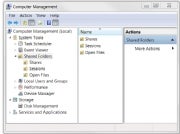
Shared FoldersSharing is caring: For a little assistance in tracking your shared folders, right-click My Computer (or Computer in Windows 7) and click Manage to bring up the Computer Management tool. Then click Shared Folders to see a list of all of your machine's shared folders, file-sharing sessions, and open files.

Essential Add-Ons

Look, Ma, no mouse: XP users should grab Launchy, a free keyboard-driven launcher application that allows you to access programs, files, and even Websites with just a few keystrokes. (Vista and Windows 7 users get the same functionality from the Start menu's search tool.)

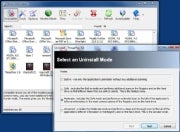
Revo UninstallerCleaner than you found it: To make sure that your programs uninstall completely, use Revo Uninstaller--it's often more thorough than the programs' own supplied uninstaller routines.

Annoyance buster: If you're tired of User Account Control dialog boxes popping up all the time in Windows Vista, but you don't want to disable the security feature completely, grab TweakUAC to set it to Quiet Mode. Windows 7 has its own UAC controls, but can still benefit from TweakUAC.

Get your hands dirty with Greasemonkey: Optimize your Web browsing with Greasemonkey for Firefox, an add-on that lets you choose among thousands of user-designed scripts for blocking ads, changing the layouts of popular sites, and more. (Variants also exist for Internet Explorer, Chrome, and Safari.)

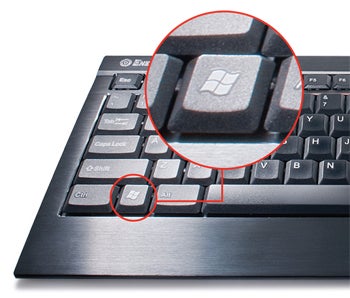
Work Your Windows Key

Windows key

Photograph by Robert Cardin
Lock your doors (and Windows): Stepping out for a minute? Remember to press Windows-L to lock your computer's screen so that no one can nose around without entering your account password.

Run, Windows, run: To access the Run command easily, press Windows-R.

Keyboard explorer: Want to open a new Windows Explorer window without leaving the keyboard? Press Windows-E.

Declutter your desktop: Access your desktop instantly by pressing Windows-D to hide all open windows. Press Windows-D again to return to where you were.

source

http://www.pcworld.com/article/184619/the_greatest_windows_tips_of_all_time.html

Top 10 Tech Stories of the Decade

Marc Ferranti, IDG News Service

While the computer industry in the 1990s thrived as corporations re-engineered business processes to incorporate IT, this decade has seen technology truly become part of mainstream culture and commerce via the Internet and ever-cheaper and smaller computing devices. Yes, the Internet revolution began in the '90s, but it was not until this decade that 14-year-olds raced ahead of professionals in figuring out how to tap social networks with hundreds, and sometimes thousands, of contacts. Here, in not-quite chronological order, are the top technology stories of the decade, selected by the IDG News Service for their singular impact on the industry as well as their emblematic status as examples of the trends that shaped the course of IT.

The dot-com deathwatch

Just months after concerns about the Y2K bug fizzled, the tech-heavy Nasdaq, symbol of the "new economy" because of the many IT companies it lists, hit a high of 5048 ... for the decade. From that date (March 10, 2000, to be exact), over the next two and a half years, the index plunged almost 4,000 points, and never fully recovered. During those first years of the 2000s, companies burned through venture capital and IPO funds only to find that they couldn't stay in business long enough to raise cash the old-fashioned way -- offering actual products that people are willing to pay for. Lesson learned: The e-commerce companies and IT vendors that survived figured out how to deal with a more skeptical customer base and did not suffer as much as other sectors during the Great Recession at the tail end of the decade. Now IT appears poised to help lead the economy back on a growth path.

Microsoft is busted

In April 2000, U.S. District Court Judge Thomas Penfield Jackson issued the first big ruling in a series of antitrust decisions to hit the software giant during the decade. Jackson found that Microsoft maintained its monopoly power by anticompetitive means and illegally attempted to monopolize the Web browser market. The final judgment in the U.S. federal case established restrictions related to licensing agreements and ordered that Microsoft release some of its intellectual property. Microsoft also faced private and government antitrust cases involving individual U.S. states, Sun Microsystems, and the European Union, which fined Microsoft US$794 million in 2004. Ramifications persist. Microsoft still meets with U.S. officials who monitor its behavior, and the European Commission just this month accepted the company's promise to allow Windows users to choose which Internet browser they use, ending a browser-market investigation. The cases were a huge distraction for Microsoft but ultimately made its software work better with competing technology. They also provided a template of sorts for antitrust cases brought against Intel this year in the U.S. and Europe.

Apple launches the iPod, and gets back on track

Several years after his return to Apple, after being banished in the 1980s when company growth stalled, co-founder Steve Jobs realized that though the mainstream market for digital devices was booming, music players were not very well designed. The iPod, launched in October 2001, was Apple's game-changing entree into the consumer mass market. It was an immediate hit, and a year and a half later, Apple completed the content part of the picture with the launch of the iTunes Store, which opened up the floodgates for legal music on the 'Net. The concept of convergence among consumer electronics, communications, and computer technology took root in the '90s, but it wasn't until this decade that the consumer market, with Apple leading the way, became the holy grail for even traditional IT vendors. By 2003, mainstream PC makers like Dell offered LCD televisions and Hewlett-Packard announced digital cameras. But the iPod was, and remains, a clear category leader and became a symbol of the consummation of the marriage between IT and the consumer market.

HP ties the knot with Compaq

Carleton Fiorina came to Hewlett-Packard with a plan for sweeping changes at the old-school tech vendor, going public in September of 2001 with a bold gamble to buy Compaq for $25 billion. An ugly battle ensued, as investors dumped shares, analysts warned of the massive risks associated with complex tech mergers, and heirs to HP's founding fathers went public with their opposition to the merger, setting the stage for one of the largest corporate proxy fights in history. Fiorina prevailed in 2002, but the next few years were rocky, and she was forced out in 2005. Ironically, her grand plan for the company ultimately worked out under her replacement, the low-key former NCR President and CEO Mark Hurd. Hurd brought operational efficiency to the company, which is now the biggest IT company in the world, surpassing archirval IBM. The acquisition also pointed the way for an M&A trend in the decade that saw the biggest IT bellwethers grow even bigger in an effort to become one-stop shops for customers.

Google superstar

Google's initial public offering in August 2004 was probably the most talked-about business story of the past 10 years. A year later its share value ascended to the point where the company became the most highly valued media company in the world, beating Time Warner. Its stock and its dominant position in search and related advertising is still the envy of just about every other company on the planet, a testament to the company's tech savvy and ability to figure out how to monetize its position. Ad dollars have enabled the company to branch out, offering a host of online apps including Gmail, the Android mobile phone platform and the upcoming Chrome OS. The company is leading the way to a future in which most people access most data and applications from the Web, rather than a hard drive. One of the big stories of the next decade will be whether the company can make money from its non-search technology, and successfully complete its end-run around Microsoft, which still dominates software for the PC.

Vista delays .... and launches

After numerous setbacks, Microsoft in November 2006 launched Vista, along with Office 2007 and Exchange 2007. Though Microsoft CEO Steve Ballmer at the time called it "the biggest launch in our company's history," it didn't have that feel. Consumer versions of Vista and Office wouldn't be available until 2007, and the operating system itself was painfully slow, buggy, rife with annoying system alerts, and failed to offer working drivers for a range of peripherals. Customers did not buy it. By the time Windows 7 was launched this October, Vista's predecessor, Windows XP, was still being used by 72 percent of computer users, compared to 19 percent for Vista. Though Win7 has been greeted with relative enthusiasm, the Vista episode left an indelible mark on Microsoft, which as it struggled to repair the faulty OS and burnish its tarnished image, saw Google and Apple race ahead in Internet search and the consumer market.

The battle over Facebook: Social networking hits prime time

Facebook's decision in October 2007 to sell a $240 million minority share to Microsoft, which had been fighting Google for the stake, solidified social networking's central place in technology this decade. The Microsoft stake valued Facebook at $15 billion total, even before it figured out how to monetize its services. While social networking had been a growing trend for years, Facebook led the way, offering interactive features and a development platform that had the social networking site MySpace and others playing catch-up. The problem of monetization, however, has been compounded by privacy issues. The ability of Facebook's Beacon ad system to track user actions whipped up a controversy two years ago that Facebook is still struggling to deal with. Just this month, Facebook introduced new privacy settings aimed at making them simpler to figure out by its end-user base, which has grown to a whopping 350 million people worldwide.

The rise of the botnets: Security tops Web worries

Here's a pop quiz from the annals of top 10 lists this decade: Why are U.S. presidential candidate Ron Paul, the "Storm Worm," e-card invitations, and the country of Estonia all alike? Within the span of one year they all became associated with botnets, which let criminals control computers in numbers up to tens of thousands. Botnet perpetrators use so-called "zombie machines" to flog useless products and inflict all sorts of damage, as when Estonian government Web sites were crippled in April 2007. Botnets got so sophisticated that they began to be offered as, essentially, software-as-a-service packages to criminals. That's what happened six months after Estonia was attacked, when the Paul campaign was hit. Nearly 200 million spam messages supporting Paul for president were sent without permission from the campaign. The botnet phenomenon very publicly marked an overall problem for the Web: As more and more people use the Internet globally, an ever-increasing number of hackers use their talents for online fraud. Until international cybercrime laws and enforcement procedures are in place, victories against cybercriminals are only temporary.

Gates moves on ... baby boomers, move over!

Bill Gates' June 2006 announcement that he would step out of his daily role at Microsoft in 2008 to focus on philanthropy came at a transition time. Microsoft has been criticized for being rarely, if ever, a "first mover," as for example Apple has been. But by combining deep technical knowledge with entrepreneurial acumen, Gates embodied the great American knack of seizing a great idea and commercializing it beyond expectations. His deal to provide the operating system for the IBM PC in 1981 fueled the personal computing revolution in IT originally sparked by the Apple II, establishing an industry. Gates led Microsoft to dominate the desktop market, bring the graphical interface to the masses, and navigate the currents of the early Internet era. While it can be argued that Gates' withdrawal from daily operations at Microsoft did not have a direct impact on tech, it marked a milestone: As the baby boomer leaders of the PC era begin to be usurped by Internet upstarts, so too is technology moving away from a desktop-centric view of the world. Meanwhile, Gates may prove to have a great second act if he can revitalize philanthropy, as he did computing.

The iPhone: Apple redefines a market, again

Yes, Apple products warrant two entries in the decade's top 10 tech stories. That's because while some companies reinvent themselves. Apple, under the guidance of the mercurial Jobs, reinvents markets. After redefining IT in the 1970s with the Apple II and then pushing the envelope in personal computing with the Mac in the 1980s, Apple stalled when its business model ended up giving the company a loyal -- but tiny -- user base. The company started to ride high again after launching the iPod, and in 2006 breathed new life into the Mac by moving to Intel-architecture chips. Before the iPhone, there were many multifunction phones. But amid a June 2007 launch that had people lined up at stores from Tokyo to San Francisco, Apple proved its design mojo still worked. The iPhone combination of cool design, phone functions, Internet connectivity and multimedia features raised the bar for any manufacturer of connected handheld devices.

(This article includes items from the IDG News Service's annual top 10 technology stories, and contributions from staff worldwide.)

Choosing a Printer for Digital Photography

Although digital technology allows people to display and store their images using various media which are reputed to last for centuries, there’s still something to be said for having an actual photograph in your hands. Displaying digital images using various types of high-tech equipment can be a bit expensive. Because of this, many people still prefer to showcase their digital images using the conventional picture frame. For this reason, many people like buying printers for digital photography.

img

Because of the demand for digital photography printers, many companies are scrambling to build products. Each company produces a different kind of digital photography printer and then goes all out in proclaiming it to be the best. Isn’t it just frustrating? Imagine for a moment, that you were a person who wanted to buy a new digital photography printer. To make things easier for you, you decide to choose the best one available. So you go into the store and tell the person at the counter that you want the best digital photography printer available. And then you get hit by this question: what do you mean?

What, indeed, does the term “best” mean when you are selecting a digital photography printer? As with most of things in this life, the term “best” is relative. What’s best for you may not be the best for somebody else. In order to minimize your confusion, here are some standards you should use:

Tips on Making the Best Digital Wedding Photography

Brides and grooms alike are now enlisting the expertise of professionals to get the best digital wedding photography for that special occasion. And why not? They would surely want to have the best photo taken so that the memories will be preserved as long as they live.

img

More and more people are now shifting to the use of digital cameras to take pictures of their wedding. One of the reasons for this is that the quality is better compared to the traditional camera. Another reason is that the photos can be stored not only in their hard-bound albums but also on albums online.

Today, people are more dependent on their computers than ever before. With computers, they can easily upload their wedding pictures and share them with family and friends all over the world. You do not have to rely on snail mails just to send your pictures. They are being sent and viewed the minute you have them in your computer.

Secret Methods of How to Make Money with Email Marketing

Online marketing may have developed a sudden surge these past few years, but many in the know how have felt its rise even from way then. As more internet based businesses are put up, the need to develop new marketing skills and knowledge based on this new medium have arisen. More and more marketing strategies are being discovered and developed to cope with the changing face of business the business world.

After reading countless articles and sought expert advices and have read many success stories of people creating a small fortune with opt-in lists you finally decide to have one of your own. Then it happens, you think you have known everything there is to know about opt-in lists and have followed their advices to the T and you still weren’t able to make a profit.

email-marketing-ebook

eMail Marketing –The secrets Unveil

My friends Shanker Bakshi has got a solution for you if you are thinking to build your opt-in list. As they say money is in the list so you must know how to go about building a huge subscriber base. He is presenting an eBook “Email Marketing –The Secrets Unveil”. It’s written in plain language designed to help those new to E-Mail Marketing to learn the ropes, understand the rules and regulations, and discover exactly what effective E-Mail Marketing does and doesn’t allow you to do. By learning and following the rules, many people have improved their online results substantially – wouldn’t it be nice to join that select group?

This book teaches you the Step-By-Step Methods as How to Research Your Target Market, Create Your Product, Build Your Opt-In Lists and Automate Your Selling Process. Listen and think about this for just a second. You’re an internet entrepreneur, so focus on one thing and leave the email marketing to a useful tool.

Twitter Traffic – How To Drive Loads of Traffic to your blog and Make Money


If you aren’t using twitter as a way of generating free traffic to your website, you’re missing out on one of the easiest marketing strategies ever to hit the Internet.

With so many social communities online, it is easy to see why Internet Marketers with limited time have been drawn to the simplistic interface and speediness of the ever-growing community called Twitter. Twitter is a very simple network to get involved in, even if you have been unsuccessful with other social networking websites in the past. Twitter is the most powerful, active and established micro blogging network available at this time, and if you aren’t exploiting its popularity to build or further your business, you’re missing the boat.

In fact, one of the most common questions I’ve received from those considering building a twitter marketing campaign is, “what is so different about twitter?” In truth, on first glance, twitter appears to be very basic compared to many other micro blogging communities.

twitter-ebook

Twitter is a Fool proof marketing Tool
You’ve been told how profitable pay per click marketing can be, right? It sends an instant flood of traffic to your website, and “if” you structure it properly, tweak it daily, monitor it regularly and keep your account consistently funded with hundreds, if not thousands of dollars, you can actually make it work for you.

dot Com Guru Guide to Twitter Traffic
My Friend Shanker Bakshi better known in blogsphere as dot Com guru is promoting a new eBook which guide you how to build huge twitter following and how you can use twitter as traffic source to your site. The guide also illustrates how you can make money by using twitter as strong affiliate marketing tool.

Join Affiliate Program Make Money
You can join affiliate program to promote this eBook and get 50% commission on every sale. No threshold limit, No minimum payout amount. You will be paid your due commission to your PayPal accounts within the first week of every month for your previous month’s sales.

Twitter is busting at the seams with new members each and every day, and many of these people are potential customers. Hesitate and you’ll be left behind.

Wordpress 2.9 Is Here With Us Now!

Yes Wordpress 2.9 is here, and officially released and this one ain’t beta but final! In Wordpress 2.9, many most-demanded features that previous versions should have added almost completely, such as:

Wordpress 2.9 Here

  • Image editor to crop, edit, rotate, flip, and scale your images,
  • The awaited undo/trash which replacing annoying “are you sure” when deleting posts or pages
  • Plugin compatibility checking before upgrading, Wordpress will tell whether your installed plugins are compatibility with the upgrade, this will avoid plugin incompatibility with Wordpress new version
  • Easier video embeds, embedding video will never been easier than this, just copy the video url and paste it…done, magically the feature will turn it into the proper embed code, currently it supports: YouTube, Daily Motion, Blip.tv, Flickr, Hulu, Viddler, Qik, Revision3, Scribd, Google Video, Photobucket, PollDaddy, and WordPress.tv (and more in the next release).
    5. For SEO, WP 2.9 has canoncial url, thus no worry about duplicate content.

There is plenty more exciting features in this release to learn more you can visit the WP Development Blog

But actually one feature that I always wanted since the release of WP 2.7 but never been added yet, as you can see since the release of WP 2.7 we are able to add plugins or themes easily without needing to download them because we can directly install from Wordpress repository.

But no functionality to install plugins or themes that are not in repository, thus it will be perfect if there is “add url” for installing plugins or themes that are not registered in WP repository thus I don’t need one-click plugin updater.


Browse: Home / Seo Contest / Busby SEO Test Current Rank Busby SEO Test Current Rank

Now my Busby SEO Test under domain RumahAbi.info for the several times is nowhere to be found in Google SERP, I don’t know where it’s this time, totally clueless. This blog seems to like gone far away without telling me where it goes. It really does need a time to recover I think, yet I don’t know what happens to it by which it needs recovering , from what?

By the way, enough talking about my blog let’s give the review over the current 1st position in Busby SEO Test. Here’s the screenshot for 5 blogs that are able to be in the first place:

busby seo test current position

As we can see that Dewaji from Dstudiobali.com still dominates the 1st and 2nd position, with Imfreakz.com in the 3rd position, and enticegh.com/busby-seo-test/ also pinayspeak.com/pinaytest in the 4th and 5th places. But of course this is just the temporary result, there will be unpredictable result in the near future. Because of the amount of contestant that continually to increase from time to time, therefore to ensure that the above is the final result will be a bungling prediction.

Because others of contestants would definitely struggling to place their blogs on the positions that the above 5 blogs dwell now, and of course the 5 blogs will do whatever they could to hold their current positions. But that’s the contest people compete each other, and myself still unable to compete with them since my 2 blogs still in the low ranks, may be next time…just wait.

Random Posts

source=
http://rumahabi.com/busby-seo-test-current-rank.html


Do Follow Forums With PR and Niche

Ringkasan ini tidak tersedia. Harap klik di sini untuk melihat postingan.

SEO Your Wordpress Description And Keyword Without Plugins

You can remove SEO plugins that are designed to optimize your meta description, keyword and to have canonical url feature to avoids duplicate content, the plugins that work that ways are All In One SEO Pack or Platinum SEO Pack, but we can have the same SEO even without using them and remove them from your plugin storage, by replacing their roles with PHP codes, why you want to do that? Well, Wordpress will be working much better if it’s using less plugin

Let see, we all know if using All In One SEO Pack as the result each of our page will have a unique description and keywords, they will help Google to identify our page and what is all about.

How if we use PHP code to replace their role? That sounds better

1. Ok now to have unique description you need to add the following PHP code inside Header.php (below title tag: )

" />

Note: the above code will automatically fetch the lines within the Excerpt to use as description, thus you need to write description in the excerpt box:

Describe Your Excerpt

But if there’s no lines or description in the Excerpt, then there is no description, so if you want the code to fetch description whether there is description inside excerpt or not, replace:

With the following:

The code will grab description from the first paragraph of yours even there is nothing inside your excerpt box

2. Now about unique keyword, what we need is “Tag” and turn it into keywords tag, well to have it, add the following code inside your Function.php:

function csv_tags() {
$posttags = get_the_tags();
foreach((array)$posttags as $tag) {
$csv_tags .= $tag->name . ',';
}
echo '';
}

And then to call the keywords, add this code (put it below description tag), now:

So the whole codes will look like this:

<?php wp_title('«', true, 'right'); ?> <?php bloginfo('name'); ?>

" />

So each of your page will have unique description and keyword now

3. Now about Canonical Url, just upgrade to Wordpress 2.9, then you will have canonical url by default!

You may be interested to read How To Make Wordpress Theme SEO Friendly Theme

Hope the post helps and see you again in the next post


Related Post Now

source=
http://rumahabi.com/seo-your-wordpress-description-and-keyword-without-plugins.html